
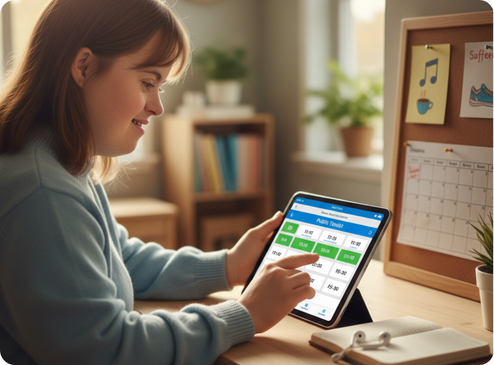
Confidence and independence: These skills do not come overnight; instead, they are built through repeated, meaningful experiences. Each day, people make choices that shape their routines, reveal how they feel, and reinforce their sense of belonging, whether it is sharing what they had for breakfast, expressing their thoughts on a new dress in the store, or deciding on activities for the rest of the day.
In communities, group homes, educational programs, and family structures, these practices shape how confidence and independence affect residents’ daily lives.
The Power of Everyday Choices
When it comes to the health of the mind and spirit, we must pay attention to what residents have to say. When individuals are given the chance to make choices for themselves, they feel valued, recognized, and on the path to achieving their goals.
In times of need, presenting options and encouraging input into decision-making fosters empowerment. Instead of doing everything for them, caregivers and support professionals may present structured choices, listen actively, and guide without applying control. By doing this, residents can acquire problem-solving skills, resilience, and safety strategies that develop lifelong independence.
Dignity Through Self-Direction
Dignity is preserved when residents have a say in the activities that influence their own lives. In a group home setting, residents can make choices independently, which in turn gives them a sense of value and worth.
Dignity flourishes when people are given power instead of direction. For example, instead of setting a specific wake-up time, present them with a flexible routine tailored to their needs. Also, instead of dictating meal options, ask them which ingredients to use, or have a vote where they decide what next week’s meal should include. This simple activity puts them in a role of meaningful participation.
These small, consistent acts of including individuals’ choices can help them build a foundation of self-confidence and independence, allowing them to trust themselves and play a significant role in the world around them.
Belonging and Inclusivity: About Having a Voice
Belonging is the result of our feelings being heard. Having a choice in social activities, hobbies, or daily activities can make us feel we are part of the community, and this is no different for residents in a group home.
Inclusion is more than just physical presence in a group setting; it is about engagement and attention. As people participate in activities around them, they develop stronger ties with other members and, as a result, become full members of the group.
In community settings, promoting inclusion means offering residents opportunities to participate in activities. This includes, but is not limited to, organizing community trips, decorating shared areas, or deciding what special events will be held each month. Such actions foster a sense of community and shared ownership, which, in turn, strengthen relationships and collaboration.
Empowerment Starts With Encouraging Small Decisions
Empowerment is a process in which residents grow through constant choice. As we give people more chances to decide for themselves, their confidence and independence grow. These individuals evaluate options, consider the consequences, and stand up for what they want.
Now, empowerment comes with certain risks. When residents are protected from all types of risks, they lose growth opportunities. This is why supported risk-taking is essential, as it puts problem-solving abilities into practice and creates real-life experiences that are part of the learning process. Caregivers and professionals must offer individuals opportunities to explore and try new things, thereby improving their confidence and independence.
How Everyday Choices Support Growth
There are plenty of activities that use daily decisions to build confidence and independence:
- Daily Routines: Choosing which clothes to wear, what to eat, which personal care products to use, and how to structure an individual schedule builds consistency and self-management.
- Household Roles: Participating in household chores and tasks can foster inclusion and a sense of belonging.
- Community Engagement: Selecting what to do for the day or which activity to participate in is a great way to promote empowerment, helping individuals identify what they enjoy.
Every activity, no matter how small, builds trust with residents and, over time, helps individuals become stronger self-advocates.
Creating Environments That Support Choice
To support confidence and independence, environments should be designed to promote self-direction. This includes providing many choices, open lines of communication, visual aids as needed, and patient care from caregivers and staff. Of course, respectful communication should be in place at all times. This can include turning simple yes-or-no questions into multiple-choice options, which expands individuals’ opportunities to make decisions.
For example:
- Which shirt would you like, the blue or the red?
- How do you want to start your day, with breakfast or a short walk?
- What community groups are you interested in joining this weekend?
People do best in environments that value their autonomy. When support teams focus on empowerment and inclusion, individuals’ confidence and independence grow, helping them make their own choices and achieve greater independence.
The Lasting Impact of Everyday Choices
Over time, the choices made form a pattern that leads to significant change. Those who feel encouraged and able to participate are more socially involved, more confident in sharing their needs, and more willing to take the initiative. They see stronger connections to their community and develop a greater sense of self-worth in what they do.
Ultimately, recognizing each person’s voice and supporting their choices helps their confidence and independence grow. Through small choices, gradual skill-building, and inclusion-focused environments, individuals can discover their strengths, overcome communication barriers, and learn to navigate the world with confidence and independence.
