
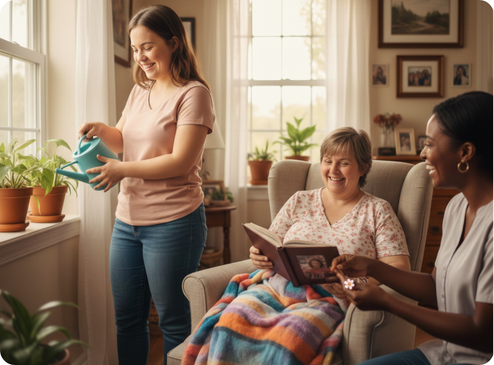
Anna spent most of her life in a hallway. Each day brought meals, activities, and quiet periods, all tightly scheduled for the dozens of residents. Her choices were limited to what a large, understaffed institution could efficiently provide. Today, Anna wakes up and has breakfast in her own kitchen. With her two housemates, she is now part of putting together the weekly grocery list and has a support worker who knows about her love of watercolor painting and her issues with loud noises. Her move to small homes for women with IDD brought about this change.
This model of care is a very different approach that moves from managing disability to cultivating ability, becoming a pathway to dignity, independence, and a true sense of community.
What Are Small Homes for Women with IDD?
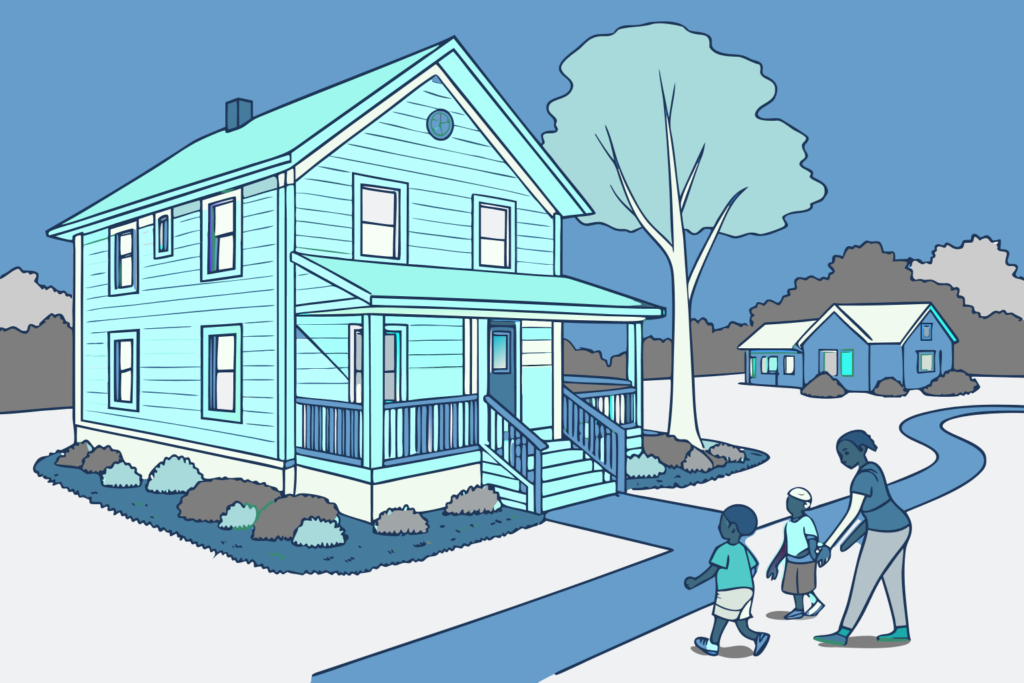
Small homes for women with IDD is typically a residence in a neighborhood where a few women (usually between three and six) call home. This model is based on person-centered care and is shaped by residents’ daily routines, room decor, and personal goals.
The Base Concept: Home, Beyond Housing
The hallmark of small homes for women with IDD is an approach designed to be intimate in scale and atmosphere. The focus relies on creating a home-like, family-style living environment.
Staff do not function out of a central nursing station in uniform. Instead, they are supporting professionals who offer life skills training and community integration within the setting of a shared home.
The Value of a More Limited Approach
Inside small homes for women with IDD, it is common to see a chain reaction of positive results that are hard to achieve in larger settings.
Customized Care and Strong Relationships
With a lower staff-to-resident ratio and a consistent team of caregivers, staff develop deep, trusted relationships with each woman. They identify unique communication styles, notice early signs of distress or illness, and tailor support to each woman’s personality and past. This level of personalization is the cornerstone of effective and compassionate care in small homes for women with IDD.
Growing Your Practical Skills and Confidence
In large-scale settings, tasks such as food preparation, cleaning, and budgeting are handled by a central team for efficiency. In small homes for women with IDD, these functions are integrated into daily life. Women are included in meal planning, laundry, and the care of their shared spaces, giving them practical, transferable skills. This hands-on experience in a real-world environment also helps build confidence and prepares them for more independent roles.
A Stark Contrast: Small Homes vs. Institutional Care
Moving from a large institution to small homes for women with IDD is a shift beyond just a change of address; it is a change in philosophy.
From Rigid Structure to Rhythm
Institutional care is often defined by rigidity: set meal times, large group activities, and a rigid schedule that works for the system. At small homes for women with IDD, a different, more personal route is taken. Schedules are flexible, which translates into later nights for some and early mornings for others. They also reflect the residents’ preferences for activities, fostering a sense of agency and normalcy.
Community Inclusion vs. Isolation
Large facilities are often physically and socially separate from the wider community. On the other hand, small homes for women with IDD is usually embedded in the community. This natural setting fosters organic connections: saying hi to neighbors, going to the local park, or volunteering at the library. This intervention also ends the isolation that often accompanies institutional care.
The Core of the Situation: Dignity and Independence
Ultimately, the success of the model of a small home for women with IDD relies on the intangible qualities it restores and nurtures:
Dignity Through Choice and Privacy
Dignity grows when one has control of their own personal space and daily choices. In a small home, a woman has her own room to design as she pleases. She has her own opinions on what she wears, what she puts in her body, and how she spends her free time. This respect for a person’s autonomy is the basis of her worth and individuality.
Freedom as a Supported Journey
In small homes for women with IDD, doing everything alone is not necessarily the primary goal; the true goal is to offer support (when needed) in making important decisions and running her life, and to provide a framework of independence with the right amount of help to achieve success.
The evidence is clear: the environment where this person-centered support is delivered is just as important as the support itself. In a small home for women with IDD, safety, personalization, and community connection are what allow women to thrive. For families in the Washington, D.C., area seeking the gold standard of compassionate, community-based care, Harriet Residential Care offers an excellent model that not only complies with legal regulations but also opens a world of opportunity in a small home for women with IDD.
