

When a loved one with intellectual or developmental disabilities (IDD) reaches adulthood, families in Washington often face a pivotal question: How can we support her independence at the same time we support her? In Washington, D.C., many families report on the success of supported living, which we have in our city.
This care model does what traditional living alone and large group homes can’t: it fills the middle gap, offering personalized care that fosters independence in a small, community-based residence. By learning what supported living in D.C. is all about and how to access it, we turn what seemed like an overwhelming task into a positive step toward independence.
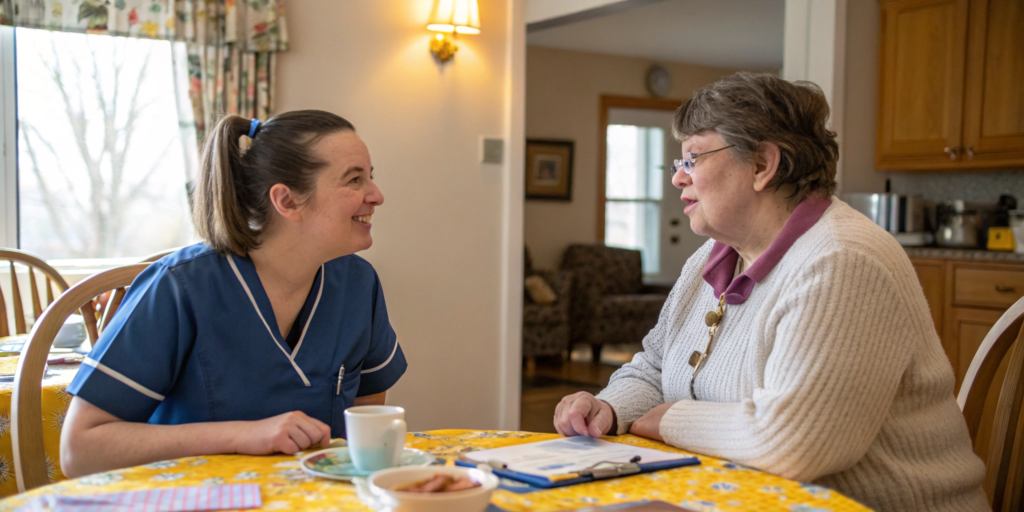
What is Supported Living?
Supported living is a Medicaid-funded service designed for individuals with intellectual and developmental disabilities who need assistance with daily activities but wish to live as independently as possible in a community setting. Unlike traditional group homes, where care is provided in a facility owned by the provider, supported living in D.C. can take place in two types of residences: A home that is owned or leased by the provider (which is usually a small home for a few individuals) or a home that is owned or leased by the person receiving services.
The base principle of supported living in D.C. is person-centered. Services are tailored to each individual’s goals, including learning to prepare meals, manage finances, develop social skills, or as simple as having a regular check-in. As per D.C. regulations, supported living services are provided for the acquisition, retention, or improvement of skills related to daily living activities and the social and adaptive skills that enable the person to live in the community and successfully participate in such community’s activities.
Which groups qualify for Supported Living in D.C.?
Eligibility for supported living in D.C. is determined by the Home and Community-Based Services (HCBS) waiver for Individuals with Intellectual and Developmental Disabilities. To qualify, an individual must:
- Enrolled in the ID/DD Waiver program.
- Have a verified need for help with daily living.
- Need support to develop social and life skills for community living.
- Have a Personal Support Plan (PSP) which notes the support for living.
For those with more intensive needs, such as individuals with challenging behaviors requiring one-to-one supervision or those with complex medical conditions requiring skilled nursing, D.C. regulations provide for higher levels of D.C. support. However, for these enhanced services, more thorough documentation may be required, including psychological assessment and physician orders.
In addition to the ID/DD Waiver, D.C. offers other supportive housing options. The Elderly and Persons with Physical Disabilities (EPD) Waiver provides equal services to seniors and adults with physical disabilities who would otherwise be placed in a nursing home. Additionally, the Department of Human Services provides Housing Supportive Services (HSS) for people experiencing housing instability due to a documented disability.
What Does Supported Living Offer?
The supported living in D.C. is very flexible. Instead of a one-size-fits-all approach, it offers services tailored to each person’s unique needs and goals. As per D.C. regulations, supported living providers offer daily activities including:
- Eating and food preparation
- Personal hygiene and dressing
- Medication monitoring and healthcare needs
- Communication and interpersonal skills
- Household chores and mobility
- Financial management and decision-making
- Problem-solving skills
- Opportunities for social, recreational, and religious activities.
This approach ensures that individuals in D.C. have access to supported living programs that do not rely on simple supervision, but instead place them at the forefront of skill development, enabling them to live full, self-directed lives.
How to Access Supported Living in D.C.
Navigating the path to supported living in D.C. is no easy task for many, but breaking it down into these simple steps can make the journey manageable:
Step 1: Identify Eligibility
First, you must contact the D.C. Department on Disability Services (DDS) to see if the individual is eligible for the ID/DD Waiver. At this stage, a service coordinator will work with the individual through the assessment process and in developing an Individual Support Plan (ISP).
Step 2: Select a Provider
Once eligible, families may choose from a set of D.C.-certified Waiver providers. As you go through the list of providers, individuals and their families may choose from those who have the most experience, positive reports, and share a philosophy that aligns with your loved one’s values. D.C. laws require providers to have at least three years of experience in in-home support services.
Step 3: Create a Person-Centered Plan
By working with the provider and DDS service coordinator, families can develop a detailed support plan that can set measurable outcomes. This plan is thoroughly reviewed four times a year and shared with the support team to verify the individual’s progress.
Step 4: Tackle Economic Issues
Supported living services are included in Medicaid for eligible individuals. That said, families should be aware of the financial details. For supported living in D.C. through the ID/DD Waiver, the financial structure differs, but it remains essential to work with a service coordinator who can explain all costs and subsidies.
Supported Living and Assisted Living: A Look at What’s Different
Families sometimes confuse supported living in D.C. with assisted living, but they serve different populations and operate under distinct frameworks.
For starters, assisted living is designed for seniors and adults with physical disabilities who want to live in a residential setting and require help with daily living activities. These types of facilities tend to be larger in scale and do not always accept those with behavioral health issues or a history of homelessness.
Supported living, on the other hand, is for people who have been diagnosed with intellectual and developmental disabilities and prefer to live in a more compact, integrated setting. The focus of supported living in D.C. is on skill development and community input rather than just daily care.
Why Supported Living Matters
Families looking at supported living in D.C., this is a choice focused on quality of life. It is about finding a home for your daughter, sister, or loved one where they can thrive on their own while receiving the right degree of support (not too much, not too little, just the right amount). In short, supported living celebrates what it means to be an adult, encourages independence, and establishes the settings for true community connection.
As you start on this journey, we have resources and caring professionals to guide you. For families looking for a dedicated partner in supported living in D.C., Harriet Residential Care offers a highly specialized support facility focused on compassion, where each woman can thrive and find a place to call home.
