

For families exploring options for a loved one with intellectual or developmental disabilities, the search often begins with big questions about safety, staffing, and overall philosophy. Yet sometimes the most revealing insights come from a seemingly simple place: In Washington, D.C., food regulations play a key role and provide the foundation for what is really required, but what sets apart a great residential facility from the rest is that they take those regulations and run with them in a different direction.
Meal time in a residential facility must be seen as a daily statement of dignity, choice, and care, three components that altogether become the core of a home. In this article, we will analyze what makes a residential facility not only compliant with meal regulations but also with the residents it is taking care of.
The Regulatory Foundation: What State Food Rules Require
Every residential facility licensed in the District must follow strict food safety and nutrition rules. The rules, issued by the D.C. Department of Health, cover proper food storage, how meals are served, and basic nutritional requirements for vulnerable adults. For any residential facility, this is a priority, not to mention just the very first chapter of this compliance.
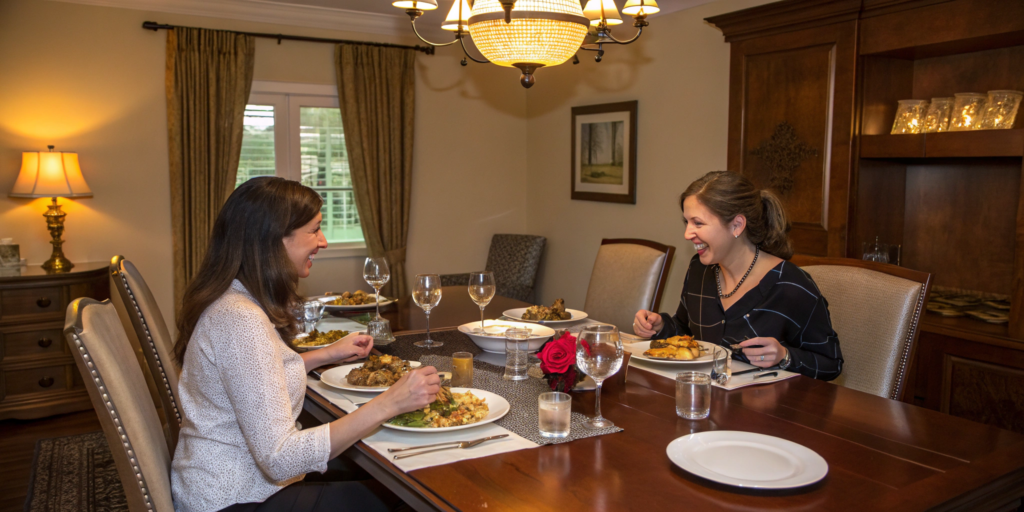
In a residential facility, what turns a functional kitchen into a dignified dining room is how a provider uses those regulations. The best programs see the rules as a base rather than a limit. They realize that although the law says meals must be safe and adequate, Harriet knows that what raises the flag is personal connection, routine, and respect. In a high-quality residential facility, the dining room becomes a stage where the residents can show their preferences and personalities.
From Care to Compassion: Documenting Dietary Needs
D. C. Regulations mandate that every resident’s specific dietary requirements, allergies, and modified diet orders must be included in each Individual Support Plan (ISP). Although this is a safety matter, a high-quality residential facility will understand that beyond that documentation lies the story of each person.
For women in such a residential facility, a well-documented dietary profile does more than list allergies or texture modifications; it captures preferences that make meals feel like home: loves iced coffee in the morning, sandwiches cut diagonally, and menus that include what she really loves. In the person-centered care offered at Harriet, we turn resident records into tools of connection.
When a resident’s favorite dish is served at her birthday breakfast, or we slice the apples as she requests, we send a message that you are seen, you are known, and your choices matter.
Choice Within Structure: Honoring Preferences
In the past, it was thought that in a residential facility, there was little to no choice, that routine and diet had to be strictly controlled. The truth is completely the opposite; a high-quality residential facility proves that structure and choice can coexist beautifully.
Even for a resident who requires a specialized texture-modified diet or has strict food allergies, there is still room for autonomy and choice. Staff may present two safe options:
- Ask residents to participate in meal prep, or
- Put out a small herb garden, which in turn allows each person to customize their plate with fresh flavors.
These small choices build confidence and summarize a key fact: this is a home, not an institution.
In a high-quality residential facility, choices also extend to the time of the day. Some residents prefer to break the fast late, while others thrive during sunrise. A flexible yet regular meal timetable should cater to both, reducing stress while respecting individual circadian patterns. This balance between structure and flexibility is what defines a true person-centered program.
What to Ask About Mealtime?
When looking at a residential facility, families can learn a great deal from how a home handles meals. Below are some questions that will help determine if a facility’s mealtime practices are out of respect for each individual or just complying with regulatory standards:
- How do they track and report dietary needs? Do they have a central system used by all staff that stores updated preferences?
- How do they handle modified diets (eg, pureed, chopped, low-sodium)? Do staff members know each resident’s restrictions and the cause of them?
- How do residents’ choices play out in a medical context? For a resident who enjoys pasta, can they still enjoy it in a different, safe form?
- What is the setting of the dining area? Do they eat as a family? Can residents share their inputs about the menu? Is the atmosphere relaxed and quiet?
- How are changes in diet communicated? When a new allergy arises or a doctor changes the diet plan, what is the turnaround time for care plans to be modified, and how is staff trained to implement these changes?
A provider that is confident in what they are doing will welcome these questions. In a high-quality residential setting, mealtime is not about rushing; instead, it is a daily opportunity to show respect, build community, and honor each person’s special place at the table.
When Food Regulations Become a Window Into Care Culture
What we see at the dining tables of a residential facility reflects what is present in the rest of the home. A group home that prepares meals in a transparent, personalized, and dignified way offers the same treatment for every other activity within the facility. Moreover, how staff attend to residents’ preferences, adapt to changing needs, and treat each meal as a dynamic interaction is the basis for resident culture.
For those seeking a residential care option, this focus is vital. It offers a different approach that goes beyond a basic list of services to a greater analysis of the day-to-day experience. Does the home provide a setting where your loved one will be known, respected, and empowered? Or does it come off as a system that is only about processing them?
At Harriet Residential Care, we ensure that food safety regulations are in place, but that is only the very beginning. We are dedicated to offering person-centered care, which means each meal is an opportunity to honor the women we serve. We document needs in detail, we adapt with care, and we do not forget that a shared meal is a great source of comfort and connection.
For us to be a trusted residential facility is not just about meeting the marks; it is about creating a home where each resident feels seen, valued, and free to be herself, one meal at a time.
