

The phone rings in the middle of the night. For most, it’s an interruption, but for a staff member at group homes in D.C., this can be a possible critical incident. In consequence, the difference between a crisis that turns out well and one that just gets worse doesn’t depend on luck, but preparation.
In the District’s supported living environment, the ability of a care provider to resolve a behavioral or emotional emergency is a skill developed out of very strict, required standards. This isn’t about restraint; it is about understanding, connection, and the safety of all involved.
Beyond Reg: The Human Factor in Crisis Training
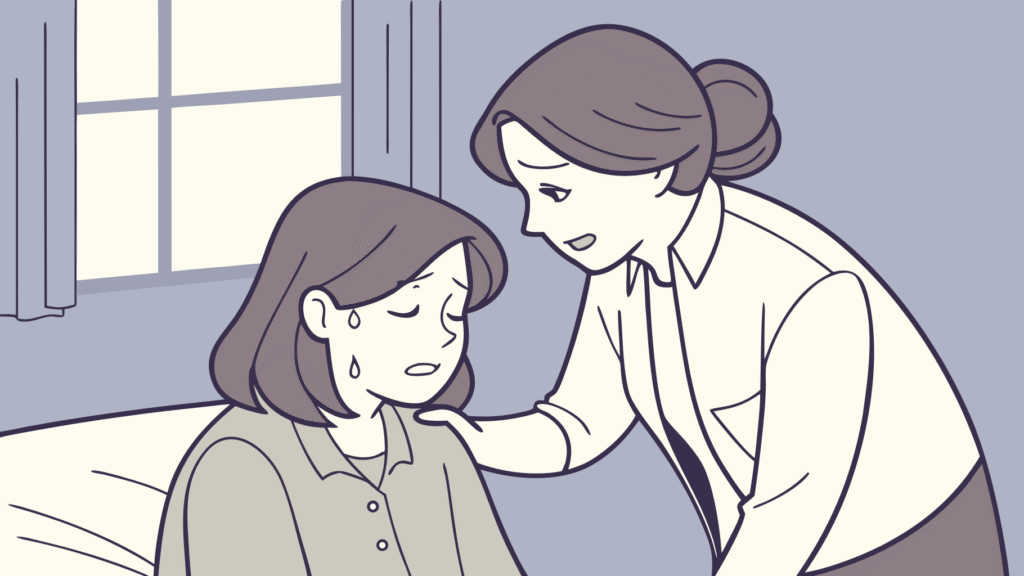
In group homes in D.C., crisis intervention is very much what staff are always prepared for. After all, these are homes where residents live in a community, not institutional facilities that ignore their residents’ mental, physical, and emotional needs. In one such home, a crisis may present itself in the form of a resident with traumatic brain injury caused by a very bad reaction to a change in routine, or a resident having a trauma-related breakdown. The focus is to support that person, rather than just suppress the behavior.
Of course, in addition to the human factor, there are cases like the recent group home fire in Michigan, where staff had to step in during a natural disaster or non-human-caused incident.
The Fundamentals of Successful De-escalation Training
Group homes in D.C. do training moves that go far beyond one simple checklist. There is a very robust philosophy built on many main pillars that, at the same time, protect the residents’ dignity and ensure staff safety.
Principles of Trauma-Informed Care
At the core of present-day crisis intervention is Trauma-Informed Care (TIC). Staff are trained to notice what may be considered as disruptive behaviors, as some may be, in fact, some forms of communication, some of which are based on past trauma. For example, changing the question “What is wrong with you?” to “What has happened to you?” can be a way to open up to residents and facilitate communication.
In a group home for adult women, this can be extremely important, as many residents may have issues of complex trauma. Through this approach, staff are able to respond with empathy instead of intervention, creating a psychologically safe environment.
Proactive Tactics and Verbal Disengagement
The best crisis intervention tactic is the one that prevents the crisis itself from ever transpiring. In high-quality group homes in D.C., staff are trained to see out warning signs like increased pacing, a change in voice tone, or social withdrawal, among many others. When a situation begins to blow up, verbal de-escalation is the first and most important tool. This includes:
- Using a quiet tone of voice and neutral body language to avoid coming off as threatening.
- Actively hearing the resident’s words and thoughts, which in turn makes them feel heard.
- Setting out limits in a non-conflictive way.
- Presenting options that empower the person.
This skill set is essential for group homes in D.C., for residents with IDD, and even for specialized group homes for women.
A Collaborative Approach from Crisis to Recovery
Managing a crisis isn’t over until the immediate situation has settled down. In group homes in D.C., which is a model of an integrated approach, this has been a plan of action that can be broken down like this:
The Whole Team’s Role
While the direct support professional may be the front line when it comes to dealing with a crisis, the entire team is always involved. The house manager is in charge of seeing that all staff are certified, something that can be achieved by performing regular drills. Also, the QIDP (Qualified Intellectual Disability Professional) uses an incident as a base to review and change out the resident’s Individualized Service Plan (ISP), which, based on the situation, is directed at the cause of the resident’s distress.
This team effort also makes sure that the response in group homes in D.C. is consistent, is documented, and always will be in the resident’s long-term well-being in mind.
Debriefing: A Critical Step
The post-crisis can be as critical as what transpires during it. Homes always have protocols, including a post-crisis debrief that includes the staff and, if necessary, the resident.
This is not to assign blame, but to present a chance to learn. For the staff, this is a time to review what did and did not work, as well as check what can be better. For the resident, it is a chance to process through the event in a safe environment, to repair relationships, and to partake in their care plan.
This restorative practice is a feature of professional group homes in D.C., which turn what may have been a tough situation into a growth and trust-building experience.
Selecting a Home that is Committed to Safety and Compassion
For those who are looking for a supportive living environment, the depth of a facility’s crisis intervention training is a key indicator. It is a tell-tale sign of the home’s philosophy and commitment to its residents’ dignity and safety. Group homes in D.C. that puts forth comprehensive and ongoing de-escalation training are those that sees their residents as individuals to be supported, instead of problems to be managed.
When it comes to the search for a safe, compassionate, and professional group homes in D.C., choosing one that has a proven track record in staff training and resident care is non-negotiable. Harriet Residential Care is the example to look into, a home that invests in its team with advanced trauma-informed crisis intervention training designed to create a very secure and nurturing environment for all its residents.
