
Will she be treated as a patient or as a person? For too long, care systems serving women with IDD have responded by placing them in institutions that, while efficient, can neglect residents’ individual needs, leading to a life lived in the performance of tasks instead of in moments of joy.
At Harriet Residential Care, our philosophy is built on a simple yet powerful idea: “Home is not a hallway.” That difference isn’t one of decor or furnishings; it is the core of what we do and who we are. A tailored residential experience is not a bonus; it is the foundation where safety, respect, and progress are built in the lives of the women with IDD who come into our care.
The Role of a Sensory-Friendly Environment
Many women with IDD report that they live in a world that is overstimulating. What we may see as normal environmental stimuli is, for them, too loud, too bright, or too chaotic.
In large-scale environments, with high ceilings, flickering fluorescent lights, echoing linoleum hallways, and constant background noise, these issues are now daily challenges. This continuous input creates stress that can lead to anxiety, withdrawal, or behavior challenges, which are often misread instead of recognized for what they are: a sign that the environment does not meet their needs.
A proper home environment is a sensory haven designed intentionally. We include a “soft” design, warm, adjustable lighting, sound-absorbing textiles, quiet areas for retreat, and personal bedrooms that reflect each individual’s comfort. When the physical space is calm and predictable, the nervous system can relax. This may not seem like a significant issue. Still, for women with IDD, it is, in fact, a prerequisite for learning, socializing, emotional regulation, and engaging with the world around them.
Dignity in Each Day’s Choices
Independence is not just living alone; it is the autonomy and the right to make choices that affect your life. In a personal living environment, “care” means fostering our residents’ autonomy. It is also about going beyond what is convenient for the staff to what is preferred by the resident.
For people with IDD, personal care means having control over day-to-day life:
- Picking out what to wear from my own collection and putting my personal touch on it.
- Designing the weekly menu and preparing meals in ways that reflect culture and personal preferences.
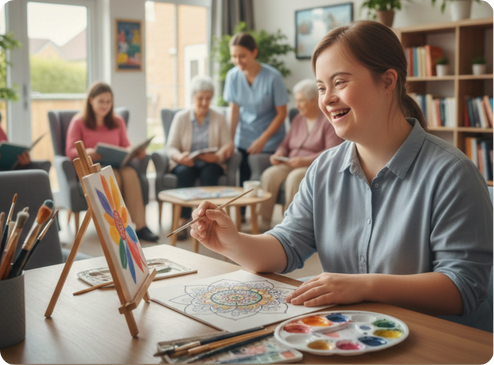
- Pursuing activities that bring joy, whether gardening, painting, listening to music, or caring for a pet.
These are not just simple privileges; they are fundamental elements of self-determination. Each little valued choice is a piece of the foundation of self-esteem. It means that every woman is the author and main character of her own story. We are putting to rest the passive “patient” role and, at the same time, we are reinforcing her identity as an adult.
Building Real Community
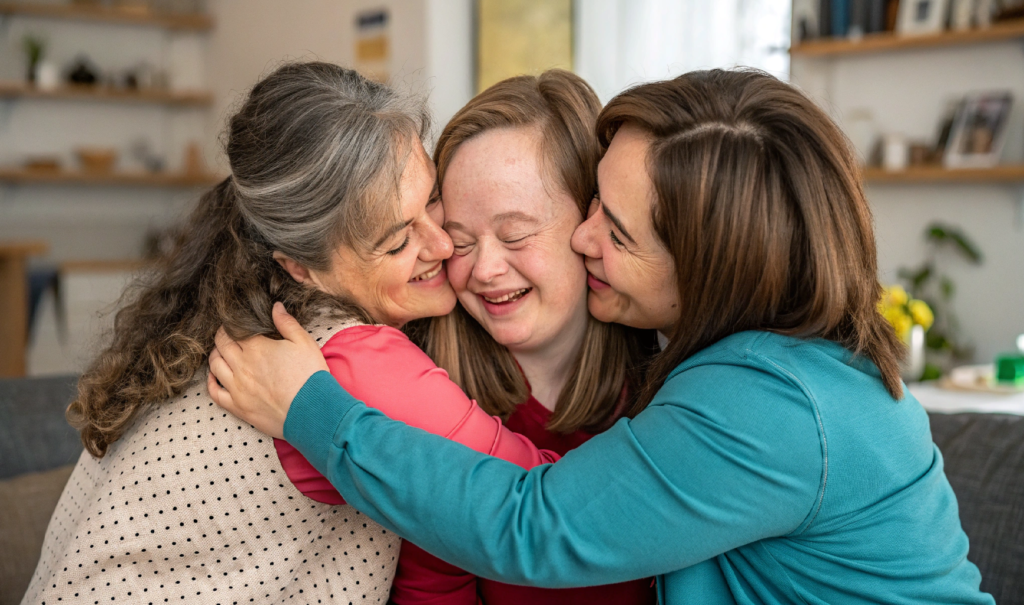
Social isolation and solitude are significant problems for women with IDD. Large facilities often feel less like a home, making it hard to form genuine connections. In a smaller residential setting, you can expect a home-like atmosphere where people cook together, decorate for the seasons, celebrate personal events, and enjoy daily activities, creating bonds that last.
This sense of community extends beyond the home, and for women with IDD, what happens out in the community also has a profound impact. For example, group outing offers the opportunity to integrate into community life, while visits to the local library and community concerts (such as the one hosted by Mike Epps last year), or volunteering at an animal shelter all help foster meaningful social connections. These actions help counter the marginalization that women with IDD often experience, replacing isolation with a sense of participation in a larger, person-centered community.
Special Care for Women with IDD
Women with IDD face unique issues at the intersection of disability and gender, and general care models often overlook these realities. Instead, what is truly needed is a gender-tailored, personal approach that offers excellent, caring support. This specialization encompasses:
- Health and wellness: Providing trauma-informed gynecological and wellness care, with staff trained to walk residents through specific situations and develop strategies to reduce anxiety.
- Safety and trauma recovery: Creating safe spaces for women with IDD who have experienced trauma or abuse, fostering sisterly support and understanding.
- Social and emotional development: Focusing on skills and social experiences that resonate with their lives, from healthy relationship boundaries to self-advocacy in health care settings.
This targeted approach focuses on seeing and supporting each person as a whole, while also acknowledging the gender-specific challenges they face.
The Harriet Solution: Where Theory Meets Practice
The “Home, Not a Hallway” promise is what we live out every day at Harriet Residential Care. We did not build Harriet to be a typical care facility; instead, we created a haven that offers real-life improvements for each resident.
Our model is built around highly personalized and dynamic care plans. We design them around the specific needs of each woman with IDD, rather than relying on a generic “for her” care plan. The staff we select and train do not act as task performers, but as empowering coaches who value relationship-based support. They have studied the “art of the possible,” which means they know when to step in and when to step back to foster maximum independence.
In our environment, women with IDD are not defined by their support needs but rather by their personalities, achievements, and growth. We see progress whenever they gain confidence, make friends, and feel that quiet pride of a new skill they acquired.
If you are looking for a community that will embrace and support your loved one as she builds a new life of purpose and joy, we invite you to see what Harriet Residential Care offers: a home for women with IDD where one simple yet valuable thing is guaranteed: a true home where they can grow and thrive.
