
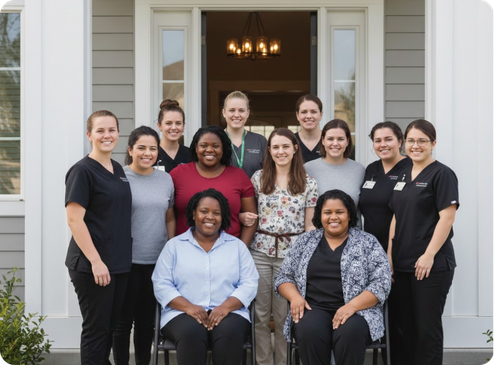
For years, disability care was often associated with “seclusion”. The prevailing care model focused on protection through separation, often placing people in isolated settings out of public view. Now, things are different, and we know better how to care for our loved ones. From research and lived experience, we have learned that true well-being is tied to connection and participation.
For women with IDD (Intellectual and Developmental Disabilities), what was once thought of as a recreational activity is now a health and growth requirement. At Harriet Residential Care, proper care is practiced out in the community as much as in our living spaces. Integration we do thoughtfully, and our front door is a point of entry, not a barrier.
Building Social Capital: From Stranger to Neighbor
Social ties, formed by the structure of a community’s interactions and trust, are what social capital is about. It’s the friendly barista that recognizes you, the grocer that knows your taste in fruit, or the librarian that puts aside a new book they think you will like. For women with IDD, who are at a significant risk of social isolation, this is a life-changing situation.
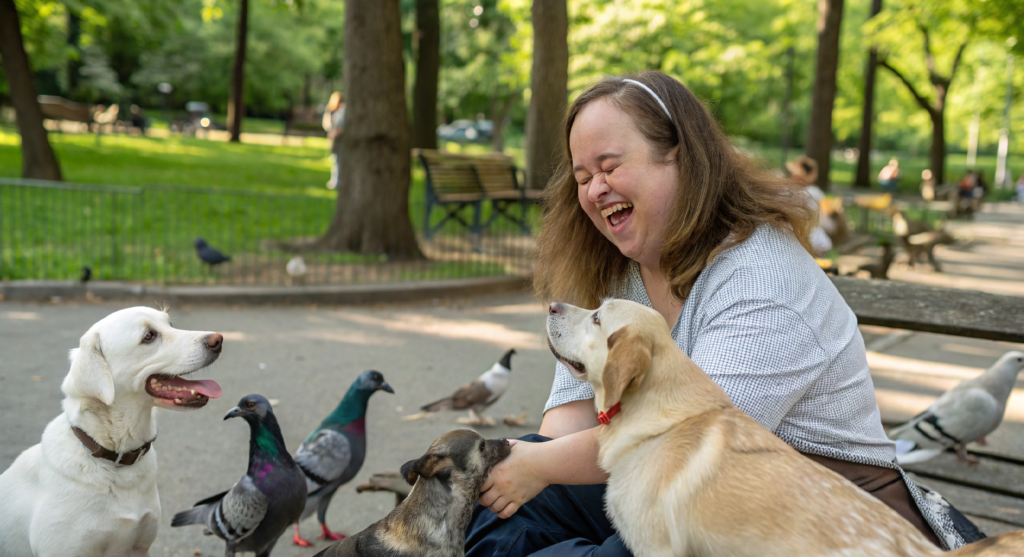
When our residents frequent local stores, go to the library, or walk in the park, they go from unknown to known. The local community becomes a network of faces and places, causing our neighbors to see the person beyond the disability.
This mutual identification is strong; it creates a real sense of attachment and safety away from home. For women with IDD, this cultivated network of easy-going, friendly associations breaks down stigma and develops a protective layer of community that affirms their place in the social world.
The Confidence Boost of Navigated Independence
Confidence doesn’t just appear out of nowhere; it is built up through practical competence in real-world situations. Navigating public spaces, such as crossing a street at the light or ordering a meal at a café, is a series of learned skills that contribute to self-assuredness. Each successful bus ride, each purchased item at the market, each initiated conversation at a community class reinforces a powerful internal narrative: “I can do this.“
This process goes beyond just completing a task. We are building executive function, problem-solving skills, and a quiet pride that comes from independent interaction with the world. After all, what residents gain in confidence from the post office trip is seen in a stronger, more assertive self at home and in all areas of life, supporting the growth and independence of women with IDD.
Combating Loneliness Through Purposeful Engagement
As explained earlier in this article, isolation is a primary issue for women with IDD, as in some cases it may cause depression and health decline. A life in one’s home, which may be very comfortable, can turn into a life of silent solitude.
The solution is to create meaningful, routine engagement. In short, take our residents out into the world, and welcome the world to them. This is a shift from our internal programs to a community-connected approach that looks like this:
- Volunteering at shelters and caring for animals to boost their sense of belonging.
- Taking a specialized art or music class at the community center with neurotypical peers.
- Joining a community garden program to contribute and share in stewardship.
- Enjoying a cup with friends in a local diner, at the daily beat of civic life.
These programs present great opportunities for friendship, shared interests, and meaningful participation. They fight the passive loneliness that affects women with IDD by putting them in active social roles.
This purposeful inclusion is a key element of comprehensive care, as it supports the mental and emotional health of women with IDD by affirming their value and place in the community.
The Path to Inclusion is Through the Community
Achieving full community inclusion for women with IDD is a continuous process, but we know what path we need to take to achieve it. We are focusing on moving from isolation to a rich, interwoven life where development is social, confidence comes from experience, and a sense of belonging is a basic human need.
That’s the philosophy we want to share at Harriet Residential Care. We are dedicated to transforming the classic care system by supporting our residents with the resources, opportunities, and encouragement needed to become a part of our community in a visible, valued, and vibrant way.
