
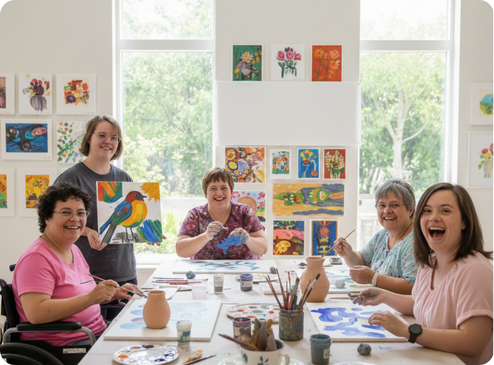
In today’s world, full of communication channels, colors and movement can speak louder than a single word. For women with IDD (Intellectual and Developmental Disabilities), creative expression goes beyond a pastime; it is the pathway to empowerment, autonomy, inclusion, and connection with the community, especially here in the nation’s capital.
This article explores how engaging in the arts and creative processes uniquely empowers women with IDD, helping them build skills, voice, and a vibrant sense of self.
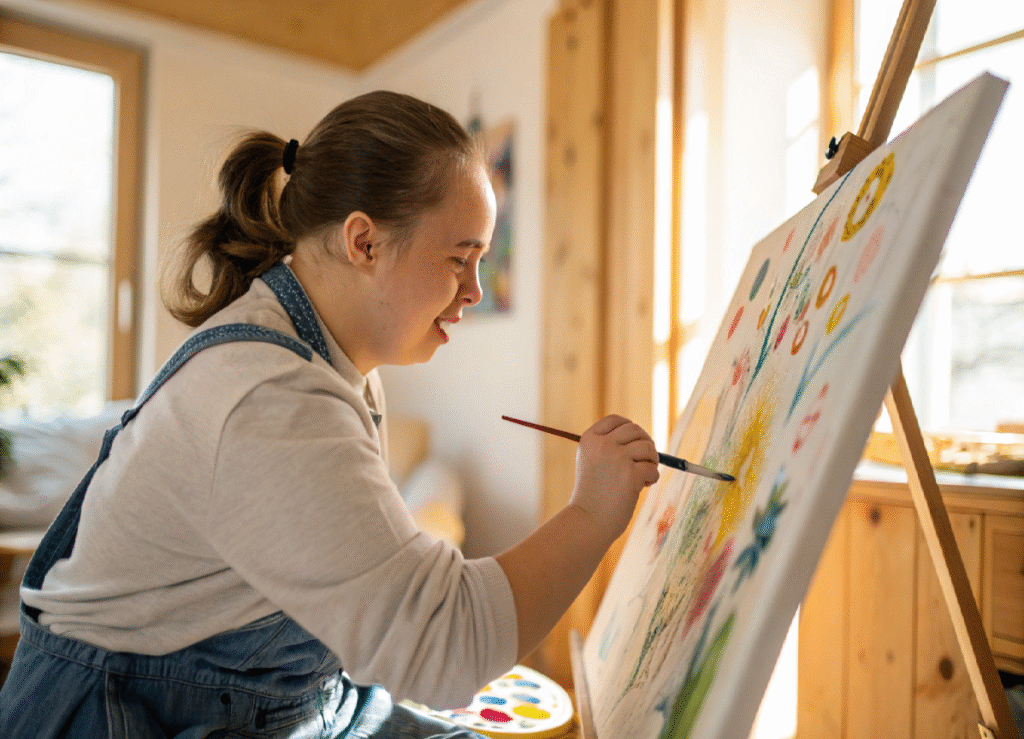
Going Beyond the Traditional: Creativity as a Communication Channel
As we explained before, some women with IDD have a hard time using conventional forms of communication, which often creates barriers. That’s why group homes provide an alternative and powerful language in their facilities:
Visual Arts and Asserting Identity
Painting, drawing, and textile arts are ways for residents to express their feelings through color and form rather than just plain words. In some cases, it becomes the externalization of inner words.
For instance, choosing colors and materials is an exercise to improve their decision-making abilities. Person-centered support models use these visual arts to help women with IDD explore and establish their identities, a process that validates their perspectives as unique and valuable and promotes a sense of belonging.
Music, Rhythm, and Emotional Expression
In some cases, what cannot be seen, like sound and rhythm, becomes a powerful form of expression, which is why music therapy and engagement (whether through listening or playing) offer exceptional tools for emotional regulation.
Music is unique thanks to its nonverbal nature, making it a perfect pathway for residents to articulate feelings that are hard to describe with regular words. For women with IDD, music-based programs can be used for recreational purposes as well as to fulfill therapeutic objectives that promote their well-being and personal expression.
Creative Acts: Tools to Communicate, Thrive, and Grow
There are instances where the empowerment of women with IDD moves from personal discovery into the social sphere. In other words, residents learn how to communicate through nonverbal, creative activities.
From Isolation to Collaborative Belonging
Participating in group creative projects (such as creating a mural or staging a theater performance) is one of the pillars of an inclusive society. They require turn-taking and a shared vision, and residents who participate can feel included in a group of peers and friends, helping combat isolation.
Not only does this align with the core values of community integration and participation, both essential for a fulfilling life, but it also complies with D.C. regulations.
Recognizing Their Small Wins
Residents can build communication skills through creative activities that promote competence and self-esteem, such as pottery or a dance sequence. When the resulting art is displayed in a local gallery or community center, the broader community can see and value the contributions of women with IDD. This public recognition is a powerful antidote to stigma and a small win in the fight against isolation.
Activities Within an Organized and Person-Centered Framework
Although all the activities available for women with IDD are meant to help with communication (as well as other benefits), group homes must set up a supportive and creative environment where residents can thrive. This is why they must operate within a framework that protects individual rights and promotes access.
Aligning with Supportive Policies
Modern disability support frameworks consistently emphasize a person-centered approach, and creativity is, in most scenarios, a natural vehicle to achieve this goal, as it starts with the individual’s choices and strengths. Programs empowering women with IDD through the arts are highly effective in fulfilling these person-centered commitments, while also improving dignity, self-determination, and community engagement.
Not only is this a “nice-to-have” framework for a group home, but it is a mandatory requirement by the D.C. Developmental Disabilities Reform Act.
Creativity as a Recognized Tool for Growth
Within D.C.’s service system, creative arts therapies and recreational activities can be integral components of an individual’s plan, especially in cases involving significant communication challenges.
They are recognized for their role in developing valuable skills (communication, social, motor, and daily living). This is especially effective for women with IDD who may have experienced trauma, as these safe environments offer the support required to work through difficult experiences while also providing any medical care they may need.
Harriet: Flourishing in a Caring Group Home
True empowerment requires an environment that offers the right tools and support. For women with IDD in Washington D.C., finding a home that actively fosters this ideal is crucial, and that’s the primary mission at Harriet Residential Care.
Harriet Residential Care is more than a group home; it is a dedicated community where activities help residents improve their personal skills and promote a safe environment where they can express their feelings. The home operates in full compliance with all D.C. regulations and the principles of the DDRA.
At Harriet Residential Care, each woman is supported in discovering and developing her unique voice, whether through spoken words, art, dance, or other forms of expression. The focus is on building a life of purpose, connection, and joy within a welcoming community where they can thrive and grow.
For women with IDD seeking a home in D.C. that truly understands how creativity can change a resident’s life, Harriet Residential Care stands as a beacon, showing how the right environment can unlock each woman’s unique potential and foster a deep, enduring sense of family where communication is a central pillar.
